// READ THIS FIRST
The useful part of a guide is what you can actually apply. The recommendations below focus on decisions, trade-offs and practical execution—not promises of guaranteed rankings, leads or returns.
// 01 — GOAL
Start with the lead you actually want
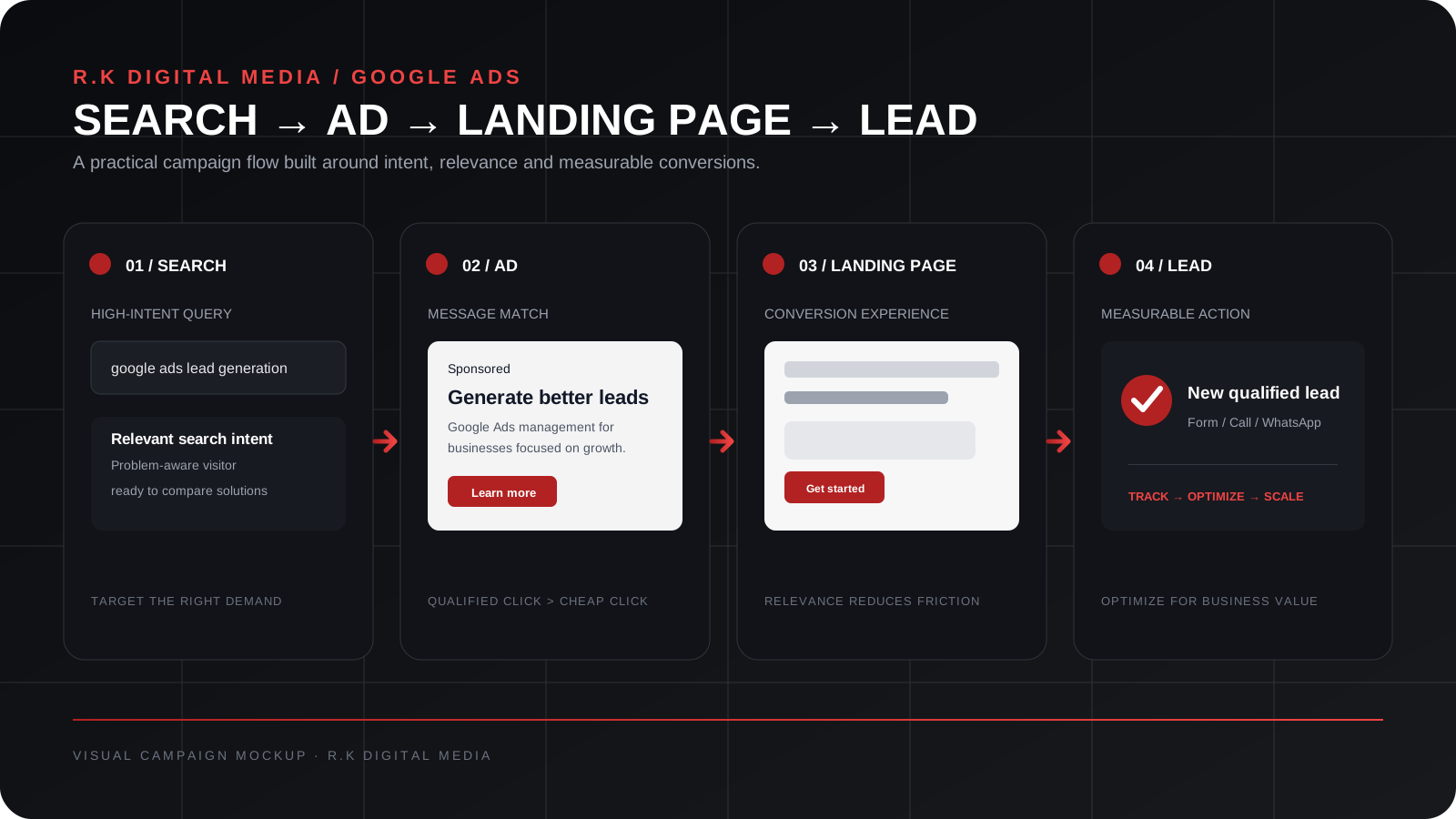
Before launching campaigns, define what counts as a valuable lead. A phone call, form submission, WhatsApp enquiry or booked consultation may have very different business value.
The campaign should be designed around the actual sales process. If every enquiry is counted equally, optimisation can favour cheap but low-quality leads.
// 02 — STRUCTURE
Build campaigns around search intent
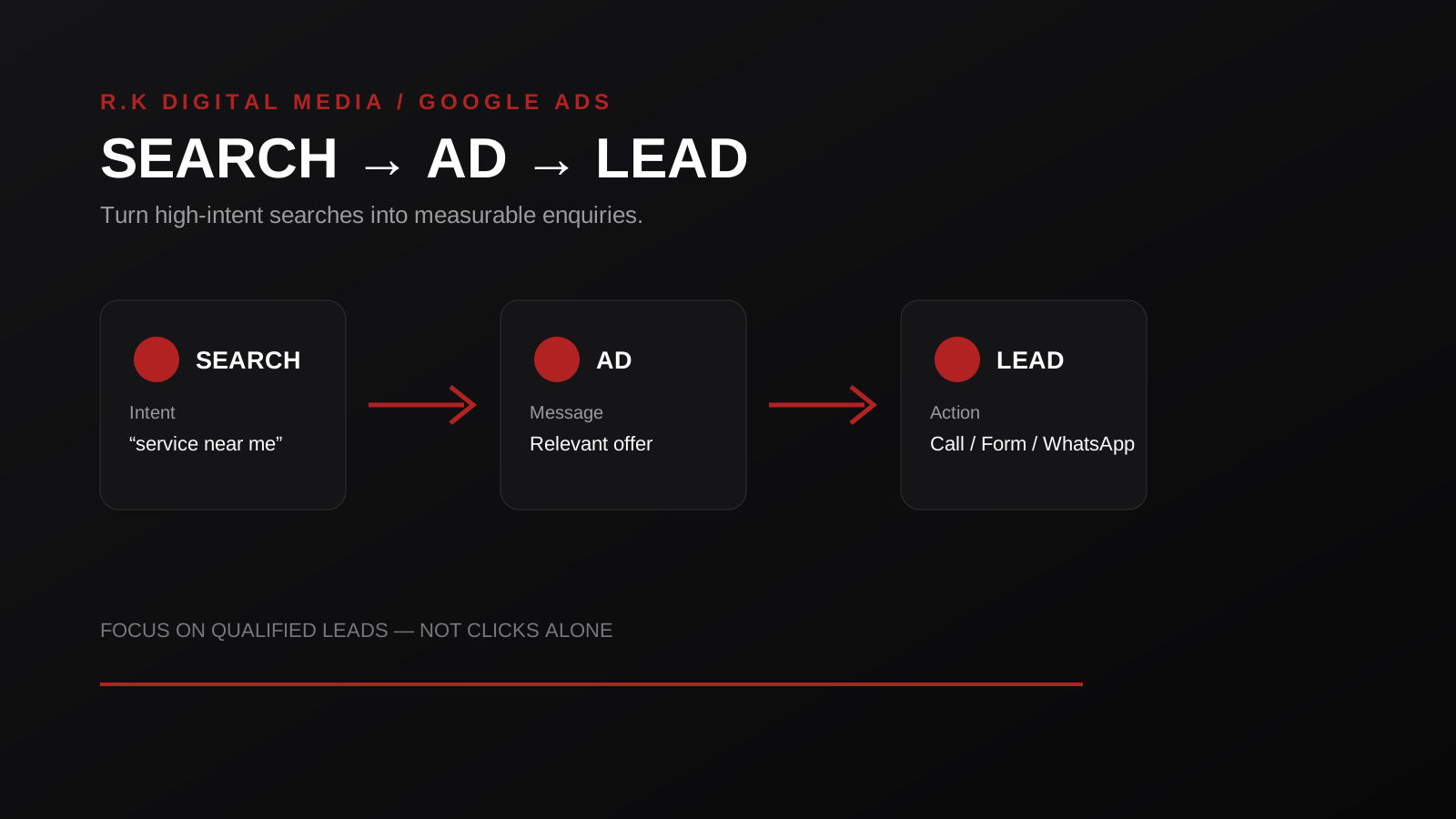
Separate important themes and customer intents so budgets, ads and landing pages can be evaluated clearly. High-intent searches often deserve different treatment from broad research queries.
Use the campaign structure to make optimisation decisions easier rather than creating unnecessary fragmentation.
// 03 — TRACKING
Track the conversions that matter
Conversion tracking should capture meaningful actions and, where possible, distinguish qualified enquiries from simple interactions. Calls, forms and other lead actions should be tested after implementation.
A campaign cannot be reliably optimised when the account is receiving incomplete or misleading conversion signals.
// 04 — LANDING PAGE
Make the landing page match the search
The page should answer the searcher's immediate question, explain the offer clearly and provide an obvious next step. Message consistency between keyword, ad and landing page reduces friction.
For local services, location, service scope, proof and contact options should be easy to understand without forcing visitors to search through the site.
// 05 — OPTIMISATION
Manage bids and budgets around data
Budgets should follow business priorities and the amount of usable conversion data available. Early campaigns often need disciplined testing before automated bidding can be trusted with larger budgets.
Review search terms, conversion rates, cost per lead and lead quality together rather than reacting to one metric in isolation.
// 06 — QUALITY
Measure lead quality, not just lead volume
- Cost per lead and conversion rate.
- Qualified-lead rate.
- Sales or appointment rate.
- Cost per qualified lead.
- Revenue or pipeline value where available.
- Search terms and landing-page performance.
// 07 — FIT
When Google Ads works best for lead generation
Google Ads is especially useful when customers already search for the service, the business can respond to enquiries quickly and conversion tracking is reliable.
It becomes harder to judge when demand is unclear, the offer is poorly defined or the sales process cannot distinguish valuable leads from low-intent enquiries.
// 08 — FAQ
Frequently Asked Questions
Is Google Ads good for lead generation?
It can be highly effective when there is existing search demand and the account is built around relevant intent, measurable conversions and a strong landing-page experience.
How much should a business spend on Google Ads for leads?
There is no universal starting budget. Budget should reflect expected search demand, lead economics, competition and the amount of data needed to make useful decisions.
Should every form submission be a conversion?
Not necessarily. If many submissions are spam or poor-quality enquiries, the account should distinguish useful lead signals where the tracking setup allows it.
What is more important: clicks or leads?
Leads are closer to the business outcome, but lead quality is even more important. Click volume alone does not establish campaign profitability.
// RELATED RESOURCES
// NEXT STEP
Want help putting this into practice?
R.K Digital Media works on practical search, paid advertising and digital growth systems. Start with a conversation about your actual goals—not a generic package.
Explore the relevant service