// READ THIS FIRST
The useful part of a guide is what you can actually apply. The recommendations below focus on decisions, trade-offs and practical execution—not promises of guaranteed rankings, leads or returns.
// 01 — HIGH INTENT
Search campaigns
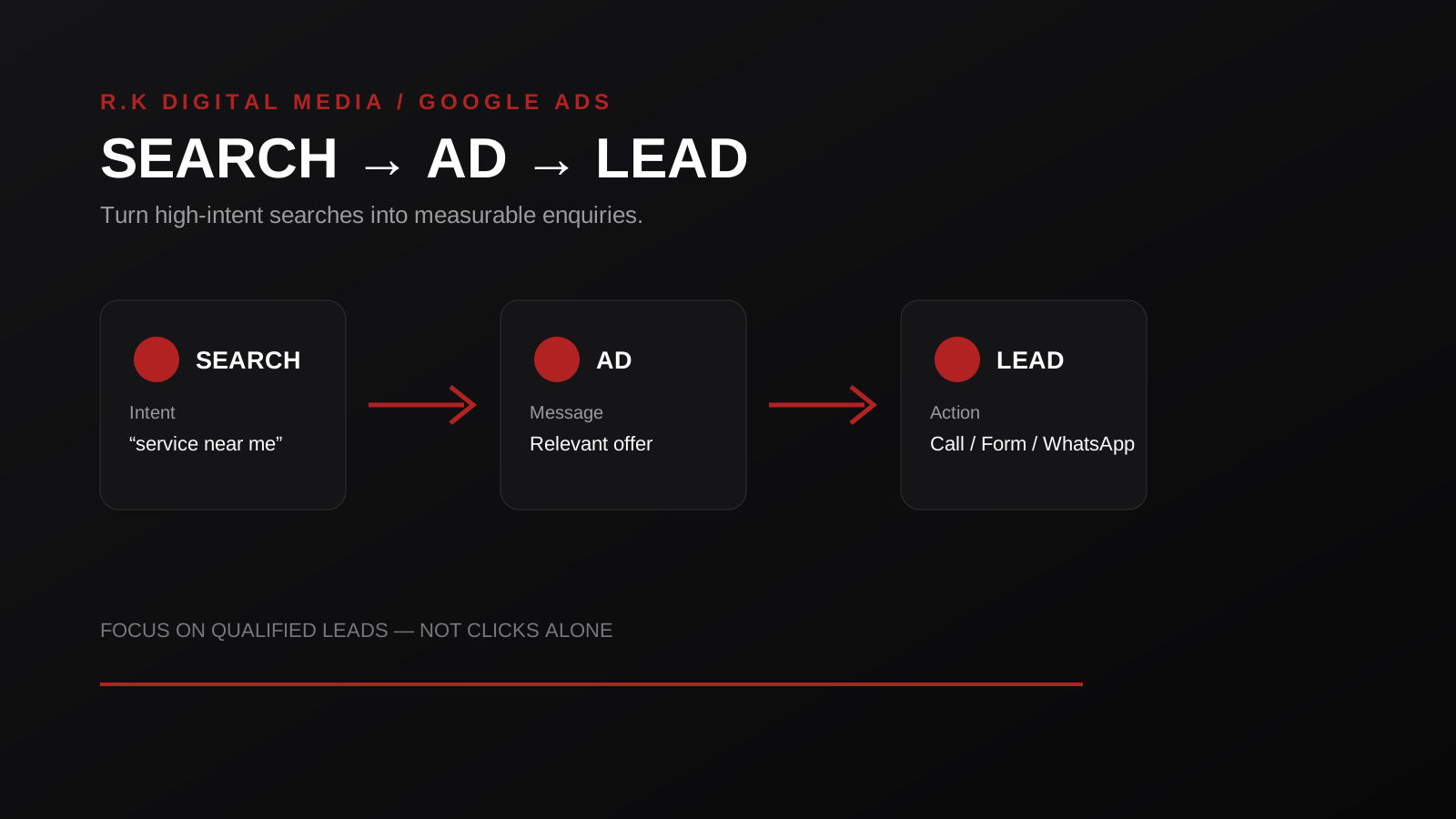
Search is useful when people already express intent through queries. Performance depends on query quality, ad relevance and the landing experience.
Campaign formats by job
// 02 — AUTOMATION
Performance Max
Performance Max can access multiple Google inventory surfaces and uses automation to find conversions. It works best when conversion tracking and creative or product inputs are strong.
// 03 — PRODUCTS
Shopping
Shopping is built around product information and is particularly relevant to ecommerce. Feed quality, product data, pricing, availability and landing-page consistency matter.
// 04 — DISCOVERY
Display
Display can support awareness, remarketing and specific audience strategies. Evaluate it on that objective rather than expecting it to behave like high-intent search.
// 05 — VIDEO
Video and Demand Gen
Video and Demand Gen can support awareness, consideration and remarketing. Creative quality and audience strategy become especially important.
// 06 — DECISION
How to choose
Start with the customer journey: active search demand, product comparison, awareness, remarketing or visual discovery. Choose the format whose inventory and controls match that job.
Customer journey → campaign
// 07 — MISTAKES
Common mistakes
Launching every campaign type at once, using one landing page for unrelated intent, tracking low-value actions as conversions and judging campaigns before meaningful data exists are common sources of confusion.
// RELATED RESOURCES
// NEXT STEP
Want help putting this into practice?
R.K Digital Media works on practical search, paid advertising and digital growth systems. Start with a conversation about your actual goals—not a generic package.
Explore the relevant service