// READ THIS FIRST
The useful part of a guide is what you can actually apply. The recommendations below focus on decisions, trade-offs and practical execution—not promises of guaranteed rankings, leads or returns.
// 01 — OVERVIEW
What Google Business Profile optimisation means
Optimisation means improving the information and structure of the profile so Google and customers can understand the business accurately. It is not a one-time exercise in adding as many keywords as possible.
The profile should describe the actual business, its services, location or service area and the customer experience it provides.
// 02 — ACCURACY
Start with complete and accurate business information
Check the business name, address, phone number, website, hours and other profile fields against the real business. Important changes should be reflected consistently across the website and other authoritative listings.
Avoid adding marketing claims or location information that does not accurately describe the business.
// 03 — CATEGORIES
Choose categories and services based on the real offer
The primary category should represent the core business. Additional categories and service information should be used only when they accurately describe what customers can buy or receive.
Service descriptions should help customers understand the offer instead of repeating the same keyword unnaturally.
// 04 — REVIEWS
Build a legitimate review process
Reviews can provide useful evidence of customer experience and help future customers evaluate a business. Ask real customers for honest feedback and respond to reviews professionally.
A good review process is operational: it gives the team a repeatable way to request feedback and identify issues rather than attempting to manufacture a rating.
// 05 — CONTENT
Use photos and profile content to explain the business
Authentic images of the business, team, products, services or premises can reduce uncertainty for potential customers. Useful updates can also communicate changes or relevant information.
Avoid publishing thin, repetitive content simply to create activity. Quality and usefulness are more important than volume.
// 06 — ALIGNMENT
Align the profile with the website and wider local SEO
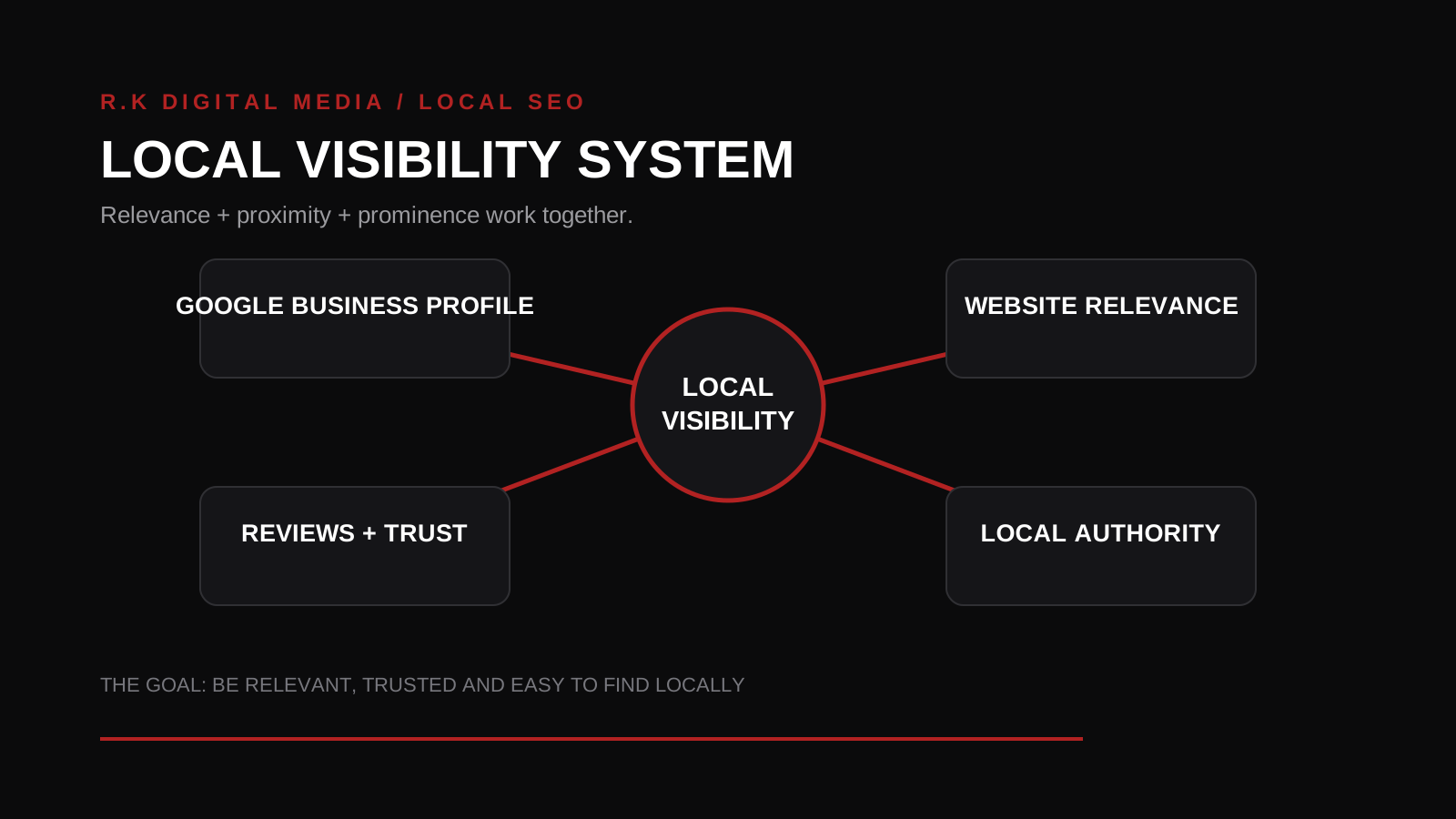
The Google Business Profile should not operate in isolation. Important services, locations and business information on the website should be consistent with the profile.
For businesses competing locally, the wider local SEO strategy can include technical SEO, location-focused content, citations and service pages in addition to GBP optimisation.
// 07 — MEASUREMENT
Measure customer actions and visibility
Track useful outcomes such as calls, website visits, direction requests, review activity and available local visibility data. Compare changes over time and investigate unusual movements rather than assuming every fluctuation is caused by one edit.
The objective is a better local discovery and conversion path, not a vanity checklist of profile changes.
// 08 — FAQ
Frequently Asked Questions
What do Google Business Profile optimization services include?
They commonly include profile audits, business information, categories, services, photos, review processes, updates, local relevance checks and ongoing monitoring. The exact scope should be defined before work begins.
How long does GBP optimisation take?
A basic audit and correction can be completed relatively quickly, while competitive local profiles often need ongoing management and testing. The right schedule depends on the business and market.
Does GBP optimisation improve local rankings?
It can improve the quality and relevance of the profile, but rankings are determined by multiple factors and cannot be guaranteed. Optimisation should be part of a broader local search strategy when competition is significant.
Should I use keywords in the Google Business Profile business name?
No. The business name should reflect the real-world business name rather than being modified solely for search keywords.
// RELATED RESOURCES
// NEXT STEP
Want help putting this into practice?
R.K Digital Media works on practical search, paid advertising and digital growth systems. Start with a conversation about your actual goals—not a generic package.
Explore the relevant service