// READ THIS FIRST
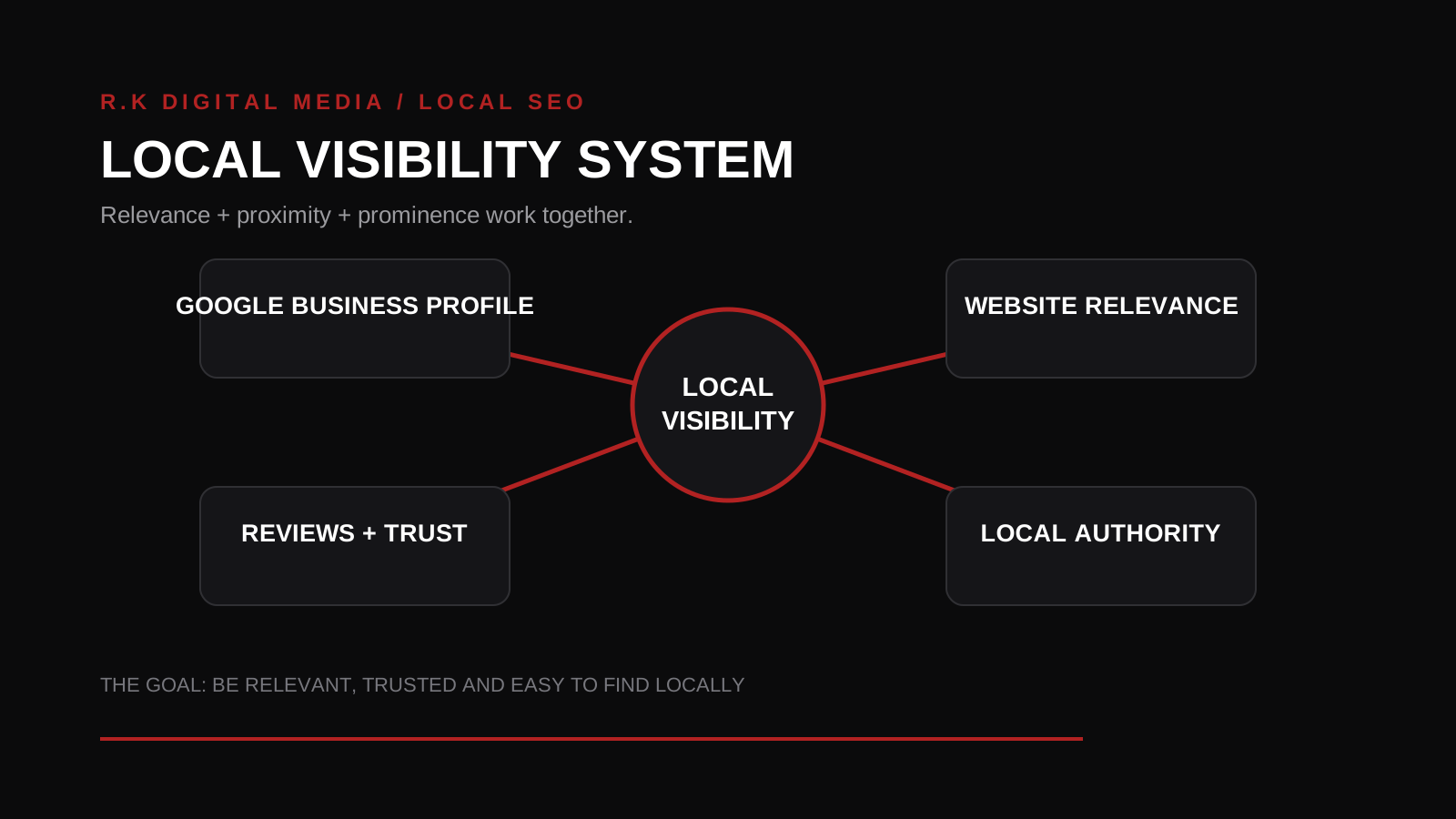
The useful part of a guide is what you can actually apply. The recommendations below focus on decisions, trade-offs and practical execution—not promises of guaranteed rankings, leads or returns.
// 01 — FOUNDATION
Start with eligibility and accuracy
Use the real business name, accurate address or service-area setup, correct hours and a phone number customers can use. Resolve duplicate or conflicting profiles before adding more activity.
Profile optimization anatomy
// 02 — RELEVANCE
Categories and services
Select the category that best describes the core business and add relevant secondary categories where appropriate. Keep services useful to customers rather than turning them into a keyword dump.
Reputation loop
// 03 — TRUST
Business information
Make sure the profile agrees with the website and important public references. Update hours for holidays and operational changes so customers are not sent to an outdated schedule.
// 04 — EXPERIENCE
Photos and customer experience
Use real photographs that help a prospective customer understand the location, team, products or work. Fresh content is useful when it adds information—not simply because it is frequent.
// 05 — REPUTATION
Reviews
Ask genuine customers for honest feedback and make the process easy. Respond as customer service. Do not buy reviews, manufacture stories or pressure people to use specific phrases.
// 06 — RELEVANCE
Website and local relevance
The website should clearly explain services, areas served and the next customer step. Local pages should add genuine value rather than repeating the same paragraph with different locality names.
// 07 — MEASUREMENT
Measure what leads to business
Track calls, website enquiries, direction requests and qualified leads alongside visibility. A profile can receive activity without producing profitable customers.
Visibility → lead measurement
// RELATED RESOURCES
// NEXT STEP
Want help putting this into practice?
R.K Digital Media works on practical search, paid advertising and digital growth systems. Start with a conversation about your actual goals—not a generic package.
Explore the relevant service